Parent Coaching Information
Parenting a neurodivergent child is hard, and you are doing an incredible job showing up, asking questions, and advocating for your child.
This guide is a simple summary of what we discussed during our discovery call and what parent coaching looks like with me. It highlights my approach, the skills we work on, and how I support both you and your child.
If you have any questions or would like to schedule a 15-minute follow-up call, just send me an email (easyadhd@gmail.com) and I will send you my scheduling link.
Parent & Family Coaching
-
Parenting complex and neurodivergent kids
Understanding ADHD’s impact on the whole family
Improving communication and predictable routines
-
Before/after a meltdown strategies
Vapor Lock and emotional overload
Emotional regulation at home
Reducing negative self-talk
Helping kids express needs
-
Building routines that stick
Understanding processing styles and zones of cleaning
Keeping track of materials (papers, backpacks, sports gear)
Time management for kids
Follow-through on tasks and responsibilities
-
Requesting accommodations
Collaborating with teachers and providers
Helping kids use their supports
Preparing for IEP/504 conversations
-
More peaceful mornings and evenings
Fewer meltdowns
Calmer communication
Kids who feel supported, not ashamed
A home environment that works for everyone
Child & Teen Coaching
-
Focus, working memory, sustained attention
Planning and prioritizing
Task initiation and follow-through
-
Morning, homework, and bedtime routines
Organizing school materials and backpacks
Cleaning and maintaining personal space
-
Handling big feelings and meltdowns
Friendship skills
Navigating conflict
Building self-confidence
Self-advocacy at school
-
Greater independence
Improved self-regulation
More resilience
Better academic follow-through
Stronger social skills
Academic & College Coaching
-
Learning modalities
Strengths-first approach
Starting a coaching relationship
Understanding the semester ahead
-
Semester mapping
Backwards planning for big projects
Using point values to prioritize
Seeing “future you” clearly
-
Calendar and tracking tools that actually work
Clear written instructions
Reducing procrastination
Identifying executive function challenges
-
Before-year and end-of-year reflections
What worked well and what to repeat
What success would look like and feel like
Long-term goal formation
-
Daily routine management
Laundry, meals, budgeting, bills
Maintaining a living space
Self-advocacy with professors and disability services
Career exploration and employment skills
-
Better consistency
More independent problem-solving
Improved grades and follow-through
Reduced shame and overwhelm
Confidence navigating school and college life
What Parent Coaching Is
Parent coaching is a collaborative, supportive process that helps you and your child understand ADHD, strengthen emotional regulation, improve communication, and create a calmer, more connected home. Many parents begin coaching after their child’s diagnosis or after their own and coaching provides tools that support the entire family.
-
Confidentiality is essential for your child’s emotional safety.
Child sessions remain confidential
Children choose which details can be shared
Parents receive structured updates every 2–3 weeks
Confidentiality encourages honesty, trust, and participation
-
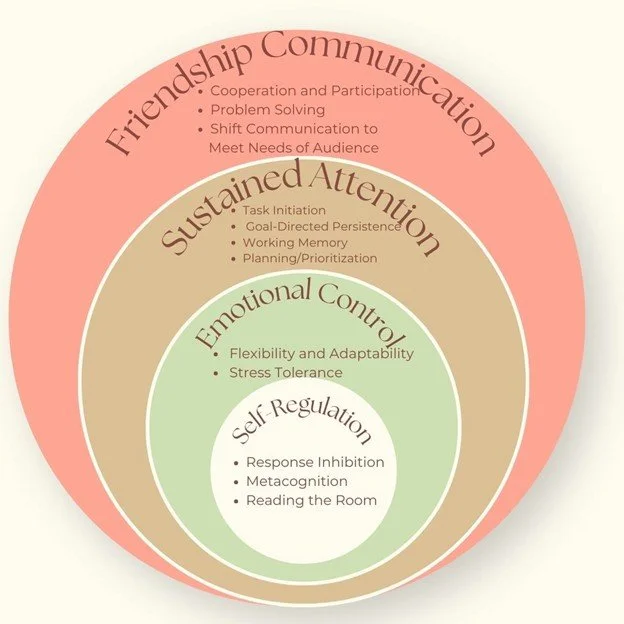
Emotional regulation
Self-regulation
Flexible thinking and smooth transitions
Friendship and communication skills
Reading the room and social awareness
Social problem-solving
Routines, organization, and homework habits
Stress tolerance
Independence
Confidence and resilience
-
Understanding how ADHD shows up in daily behaviors
Using EF-based communication
Reducing overwhelm and simplifying routines
Supporting your child without power struggles
Reinforcing confidence and emotional safety
Adapting expectations, tone, and language
Building an ADHD-friendly home environment
Supporting smoother mornings, evenings, transitions, and homework
Coaching your child through big emotions with calm leadership
A Compassionate Note to Parents
ADHD is highly genetic most children diagnosed with ADHD have a parent with ADHD.
If you are navigating both your child’s needs and your own, you are not alone.
Many parents carry years of guilt, shame, overwhelm, or self-judgment before diagnosis.
The truth is:
There is nothing wrong with you, and there is nothing wrong with your child.
Your brains are unique, capable, and beautifully wired. Coaching helps you understand those differences with clarity and compassion so your home feels calmer, safer, and more connected.
Understanding Yourself as a Parent With ADHD
If you received a later-in-life diagnosis, coaching helps you:
Understand your ADHD in daily life
Communicate with intention
Pause before reacting
Reduce shame and internal criticism
Strengthen emotional regulation
Build routines that work for your brain
Model emotional safety for your child
Your regulation supports their regulation.
Emotional Regulation & Family Dynamics
Families with ADHD often experience:
Big emotions
Misunderstandings
Power struggles
Emotional reactivity
Communication breakdowns
Feeling unheard or misunderstood
These are not failures they are ADHD patterns showing up in executive function and emotional processing.
Coaching gives your family tools to:
Recognize emotional triggers
Respond instead of react
Reduce emotional stacking
Practice calm leadership
Support difficult transitions
Break recurring conflict cycles
A regulated parent creates a regulated home.
The Parent Coaching Journey
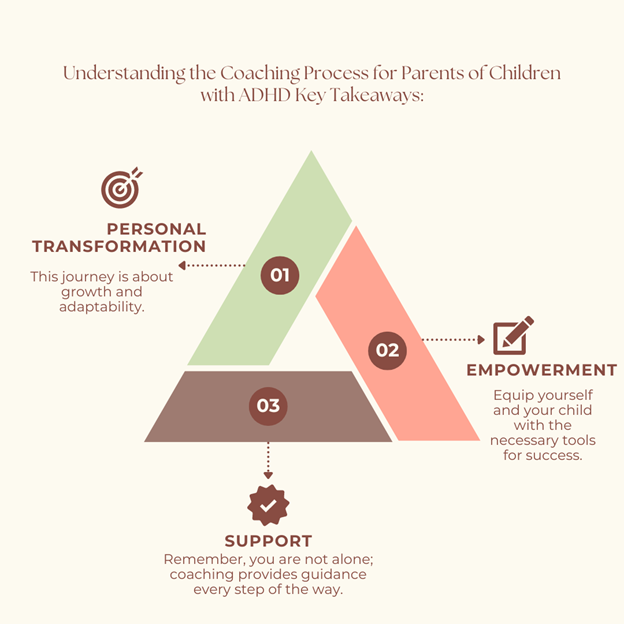
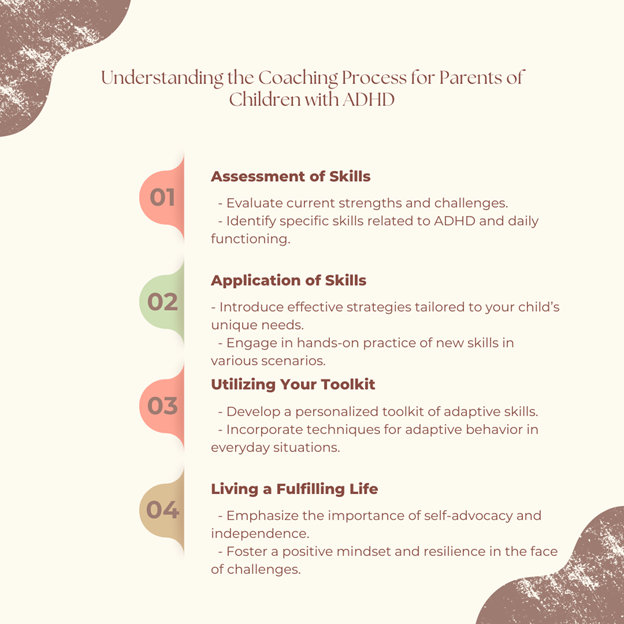
Personal transformation
Understanding your ADHD, your child’s ADHD, and how both shape emotions, communication, and daily life.
Empowerment
Learning tools, language, systems, and routines that reduce overwhelm and increase confidence.
Support
Having guidance, clarity, and validation so you feel grounded instead of alone.
Fulfillment
Creating a calmer, more connected home for your family.
I am here to support you every step of the way.
Reflection Questions for Parents
These optional questions help guide your thinking as we begin:
What aspects of my ADHD feel most challenging right now?
Where do I feel the most overwhelmed as a parent?
What support do I need to feel calmer and more confident at home?
How do I want to talk with my child about ADHD?
Which daily routines feel hardest?
What emotional triggers show up for me?
How can I create more emotional safety for both of us?
What goals do I have for my child this year?
What goals do I have for myself as a parent?
What Are Executive Function Skills?
Executive Function Skills are the everyday mental abilities the brain uses to organize, regulate, plan, focus, process emotions, solve problems, and follow through.
They influence:
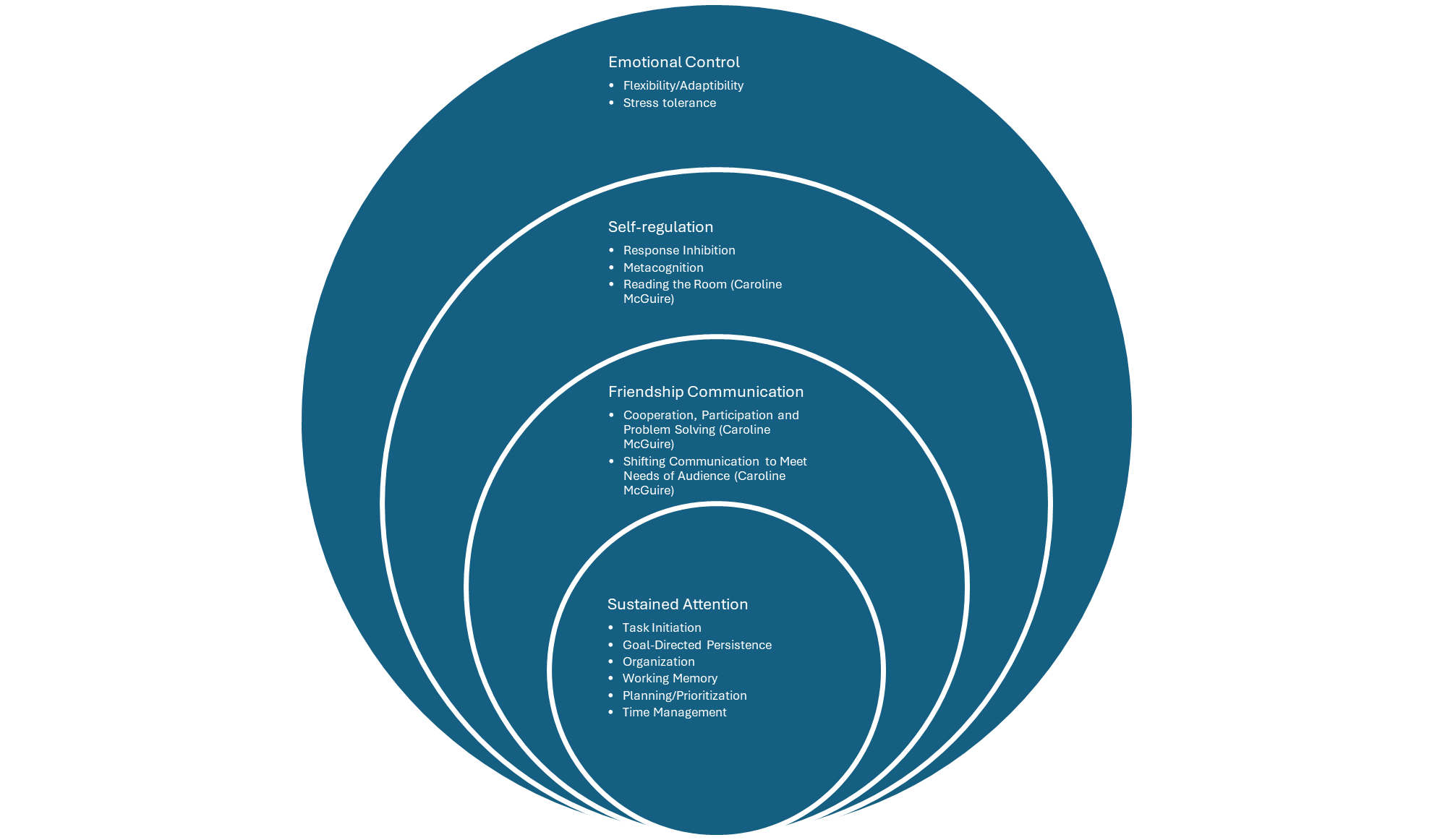
Emotional control
Response inhibition
Self-monitoring
Working memory
Planning and prioritization
Time management
Organization
Flexible thinking
Sustained attention
Task initiation
Goal-directed persistence
What Are Executive Function Skills?
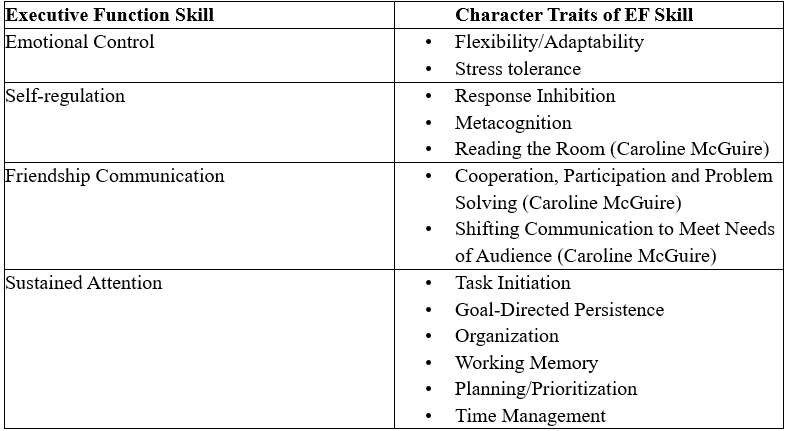
Executive Function Skills are the everyday mental abilities your brain uses to get things done. They help you organize your life, regulate your emotions, start tasks, stay focused, solve problems, and follow through.
According to Dr. Russell Barkley, EF skills act like “the secretary of the brain,” handling planning, scheduling, organizing, time management, and follow-through.
Dr. Thomas Brown describes them as “the cognitive management system,” coordinating memory, attention, emotion regulation, and behavior.
Executive Function Skills influence:
• Thinking before acting
• Holding information in mind while doing tasks
• Managing emotions
• Staying focused through boredom or distraction
• Time estimation and planning
• Starting tasks on time
• Organizing your space and systems
• Shifting plans when something changes
• Persevering through goals
• Managing stress and transitions
These skills are not about “trying harder.” They are brain-based skills that improve with coaching, tools, and support that match how your ADHD brain works.